Source Gold Plated Push Pull N Connector for Medical, Industrial, and Aerospace
Find 30 gold plated push pull n connector options with varying IP ratings, voltage tests, and customization features. Buyers can compare specifications like operating frequency, housing materials, and certification standards to select the right components for their projects.
Key considerations
Products List




Comprehensive Sourcing Guide
Strategic Sourcing Guide for Gold Plated Push Pull N Connectors
The procurement of gold-plated push pull N connectors requires a disciplined approach that balances technical performance with rigorous supply chain verification. These components are critical in environments where vibration, moisture, and frequent mating cycles threaten signal integrity and power delivery. The specific design, characterized by a push-pull locking mechanism and a female gender configuration, offers rapid connection and disconnection capabilities essential for industrial and aerospace applications. Buyers must navigate a market where product attributes vary significantly between suppliers, necessitating a detailed evaluation of material composition, environmental ratings, and compliance documentation before finalizing any purchase order.
Technical Architecture and Performance Specifications
Understanding the internal architecture of a push pull connector is the first step in defining procurement requirements. The core of the device relies on a robust locking style, typically described as "Push Pull" or "Push Pull/Breakaway," which ensures the connection remains secure under mechanical stress while allowing for quick release. The interface type is generally AC/DC or HDR (High Density), designed to accommodate high-frequency operations. The rated current for these units often sits at 12A, with a rated voltage capability of 500V, making them suitable for a wide range of power and signal transmission needs.
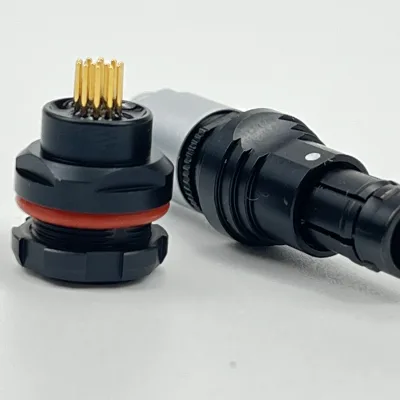
The physical construction involves specific material choices that dictate durability. The housing is frequently constructed from copper alloy, providing a balance of strength and conductivity, while the shell material may vary between brass chrome plated, PC, or PSU (Polysulfone) depending on the specific series, such as the B Series or K Series. The insulator material is equally critical, with options including PA (Polyamide), PPS, or Peek, which offer superior thermal and chemical resistance. The contact material is typically copper, often plated with gold to ensure low contact resistance and corrosion resistance over time.
Electrical performance is verified through rigorous testing protocols. Buyers should expect voltage test results of 1500V AC for 1 minute between contacts and 1350V AC for 1 minute between the contact and the shell. The insulation resistance, denoted as R(Max), is typically specified at 3MΩ. Furthermore, the connectors are designed to withstand significant environmental stress, with a temperature range spanning from -55°C to 250°C. This wide operational window allows for deployment in extreme conditions where standard connectors might fail.
Environmental Durability and Protection Ratings
The reliability of a connector in the field is heavily dependent on its protection index and resistance to environmental factors. The observed IP ratings for these devices range from IP50 to IP68, indicating varying degrees of protection against dust and water ingress. Higher ratings, such as IP66 through IP68, are essential for applications exposed to heavy rain, immersion, or high-pressure washing. For less demanding environments, an IP50 rating may suffice, offering protection against dust but not water.
Corrosion resistance is another vital metric. Salt spray corrosion testing is a standard method to evaluate longevity, with observed durations ranging from 48 hours to 96 hours. This variation suggests that buyers must explicitly request the specific test duration for the lot they intend to purchase, as a 48-hour rating may not be sufficient for harsh marine or chemical environments. Additionally, the resistance to vibration is a key factor for mobile applications, with specifications indicating a capability of 15g across a frequency range of 10 to 2000Hz. This ensures the connector maintains its seal and electrical continuity even under severe mechanical shock.
Compliance, Certification, and Regulatory Standards
Navigating the compliance landscape is essential for B2B procurement, particularly when dealing with international supply chains. The supply of these connectors is often supported by a comprehensive suite of certifications. Commonly observed certificates include UL, TUV, IATF 16949, ISO9001, ISO14001, and ISO13485. These documents verify that the manufacturer adheres to quality management systems, environmental standards, and specific industry requirements, such as those for medical devices or automotive components.
Material compliance is equally important. Products are frequently certified under RoHS (Restriction of Hazardous Substances) and REACH regulations, ensuring they are free from restricted heavy metals and harmful chemicals. Additional documentation such as MSDS (Material Safety Data Sheet) and CE marking may also be present, facilitating entry into various global markets. It is crucial for buyers to verify that the specific batch of connectors carries the relevant certificates, as these documents are not automatically guaranteed for every SKU. The industry standard often referenced for these connectors is IEC61076-2-101, which governs the dimensional and electrical characteristics of circular connectors.
Cost Drivers and Pricing Dynamics
The pricing of gold-plated push pull connectors is influenced by several distinct factors. The observed price range in the market spans from $1.50 to $21.99 USD, a wide variance that reflects differences in material quality, plating thickness, and production volume. The cost is heavily driven by the choice of insulator and shell materials; for instance, Peek or PSU shells are generally more expensive than standard PA or brass options. Similarly, the thickness and purity of the gold plating on the copper contacts significantly impact the unit cost, as does the complexity of the locking mechanism.
Minimum Order Quantity (MOQ) is another critical cost driver. The market observes MOQs ranging from 1 unit to 100 units. Buyers seeking to minimize inventory costs may find suppliers willing to accept lower quantities, though this often comes at a higher per-unit price. Conversely, larger orders typically unlock economies of scale, reducing the cost per piece. Customization also plays a role in pricing; options for custom colors, logos (such as Fpic or custom branding), and custom packing add to the base cost but are often necessary for brand differentiation and specific project requirements. The single gross weight of the product, typically around 0.015kg, suggests that shipping costs are relatively low, but volume-based freight rates should still be calculated for large orders.
Supplier Evaluation and Verification Protocols
When evaluating potential suppliers, buyers must look beyond the product listing and assess the manufacturing capability and transparency of the vendor. The origin of the products is predominantly China, with specific manufacturing hubs noted in Guangdong. While this region is a global leader in electronics manufacturing, it requires rigorous vetting to ensure consistency. Buyers should verify the supplier's ability to provide the full suite of certifications mentioned earlier, including ISO9001 and IATF 16949, as these indicate a mature quality management system.
The ability to customize is a significant differentiator. Suppliers offering customization in product models (e.g., BK-P-XXX), pin diameters (0.4~2.0mm), and packaging are better positioned to meet specific engineering needs. However, buyers must ensure that customization does not compromise the core performance metrics. A robust supplier will provide detailed datasheets that confirm the rated current, voltage, and temperature ranges for the customized version. Furthermore, the supplier should be transparent about their lead times and production capacity, ensuring they can meet the demand without compromising quality.
Quality Control and Testing Verification
Quality control is the final barrier before a connector enters the production line. Buyers should insist on a comprehensive testing regimen that includes voltage testing, insulation resistance checks, and environmental stress testing. The specific test parameters, such as the 1500V AC contact-to-contact test and the 96-hour salt spray test, should be validated for the specific order. It is also important to verify the endurance of the shell, with some specifications indicating a life cycle of over 500 mating cycles.
Visual inspection is also a critical part of the quality process. Buyers should check for consistent plating on the contacts, proper molding of the insulator, and the integrity of the push-pull locking mechanism. The shielding efficiency, which is observed to be greater than 75dB at 10MHz, should be verified for applications requiring electromagnetic interference (EMI) protection. Any deviation from the specified pin diameter range of 0.4 to 2.0mm can lead to mating failures, so dimensional accuracy must be strictly enforced.
Long-Term Procurement and Supply Chain Resilience
Securing a long-term supply of high-quality connectors requires a strategic partnership with the supplier. Buyers should consider the scalability of the supplier's production lines to handle future demand spikes. The availability of custom packaging and branding options can also streamline the logistics process, reducing the time and cost associated with secondary packaging. Additionally, the supplier's ability to maintain consistent quality over time is paramount; a change in material sourcing or plating process can alter the performance characteristics of the connector.
To mitigate supply chain risks, buyers should diversify their supplier base while maintaining a primary relationship with a vetted manufacturer. Regular audits of the supplier's facilities and quality control processes can help identify potential issues before they impact production. Finally, maintaining open communication regarding technical updates and industry standard changes ensures that the procurement strategy remains aligned with the latest engineering requirements. By focusing on these long-term considerations, buyers can ensure a reliable supply of gold-plated push pull N connectors that meet the rigorous demands of modern industrial applications.
FAQs
What certifications do gold plated push pull n connectors have?
These connectors typically hold UL, TUV, IATF 16949, ISO9001, ISO14001, and ISO13485 certificates. They also comply with RoHS, CE, and Reach regulations to ensure safety and environmental standards for global markets.
How does the temperature range affect connector performance?
The connectors operate effectively between -55 and 250 degrees Celsius. This wide range allows reliable use in extreme industrial and aerospace environments where standard components might fail due to thermal stress.
Which IP ratings are available for these push pull connectors?
Available protection indices range from IP50 to IP68 depending on the specific model. Higher ratings like IP66 to IP68 provide essential resistance against dust and water immersion for harsh outdoor applications.
Can buyers request custom colors and logos for these connectors?
Yes, customization is available for product colors and logos such as Fpic or custom branding. Suppliers also offer custom packing options to meet specific branding and logistical requirements for different projects.
What is the rated current and voltage for these connectors?
The rated current is 12A with a rated voltage of 500V. These electrical specifications support high-frequency operations and ensure safe power transmission for various industrial and signal transmission needs.
How durable are the contacts regarding salt spray corrosion?
Salt spray corrosion resistance varies between 48 and 96 hours depending on the specific product batch. Buyers should verify the exact test duration required for their specific environmental conditions before purchasing.
What materials are used for the shell and insulator?
Shells are made from brass chrome plated, PC, or PSU materials. Insulators typically use PA, PPS, or Peek to provide superior thermal and chemical resistance alongside the copper alloy housing.